
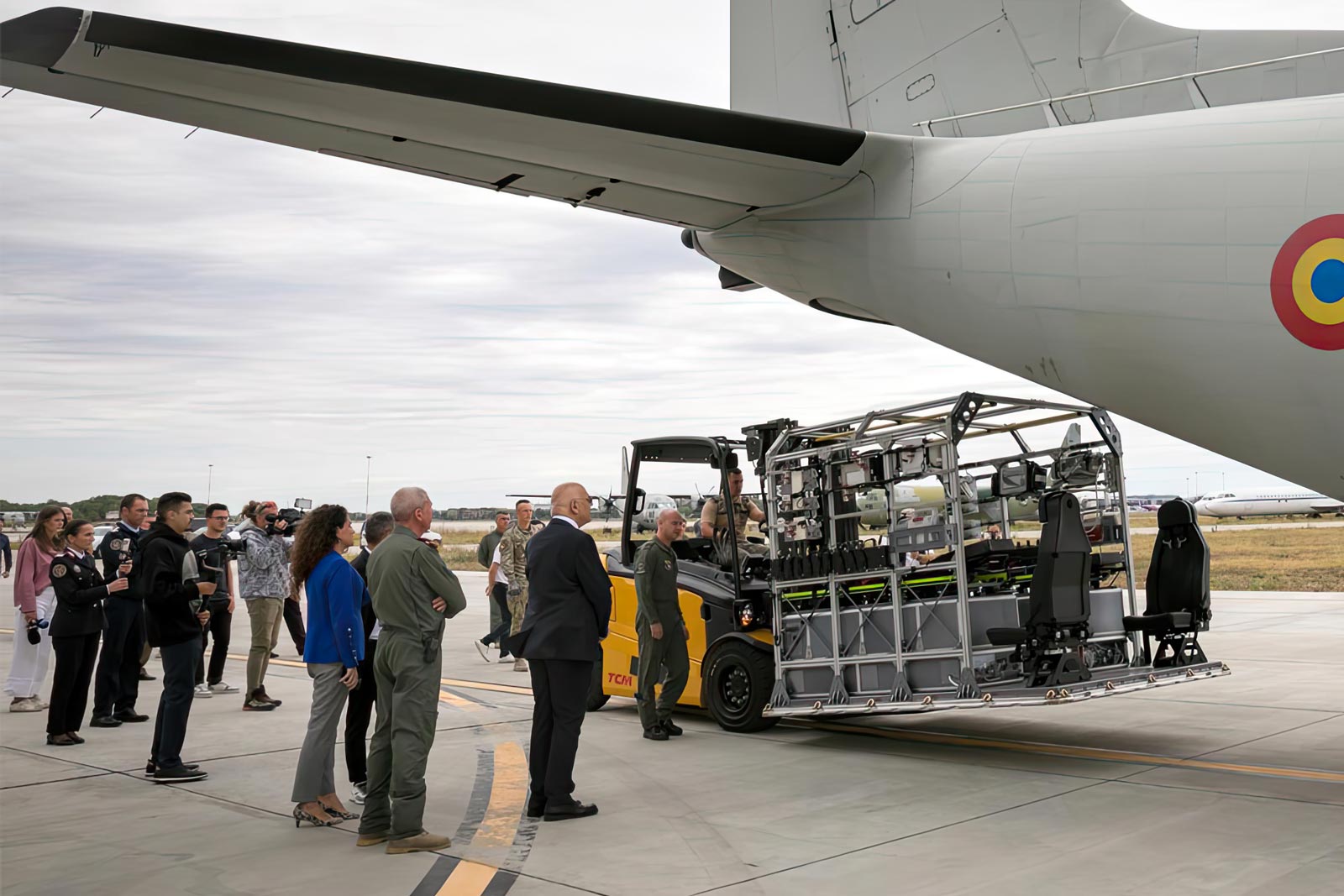
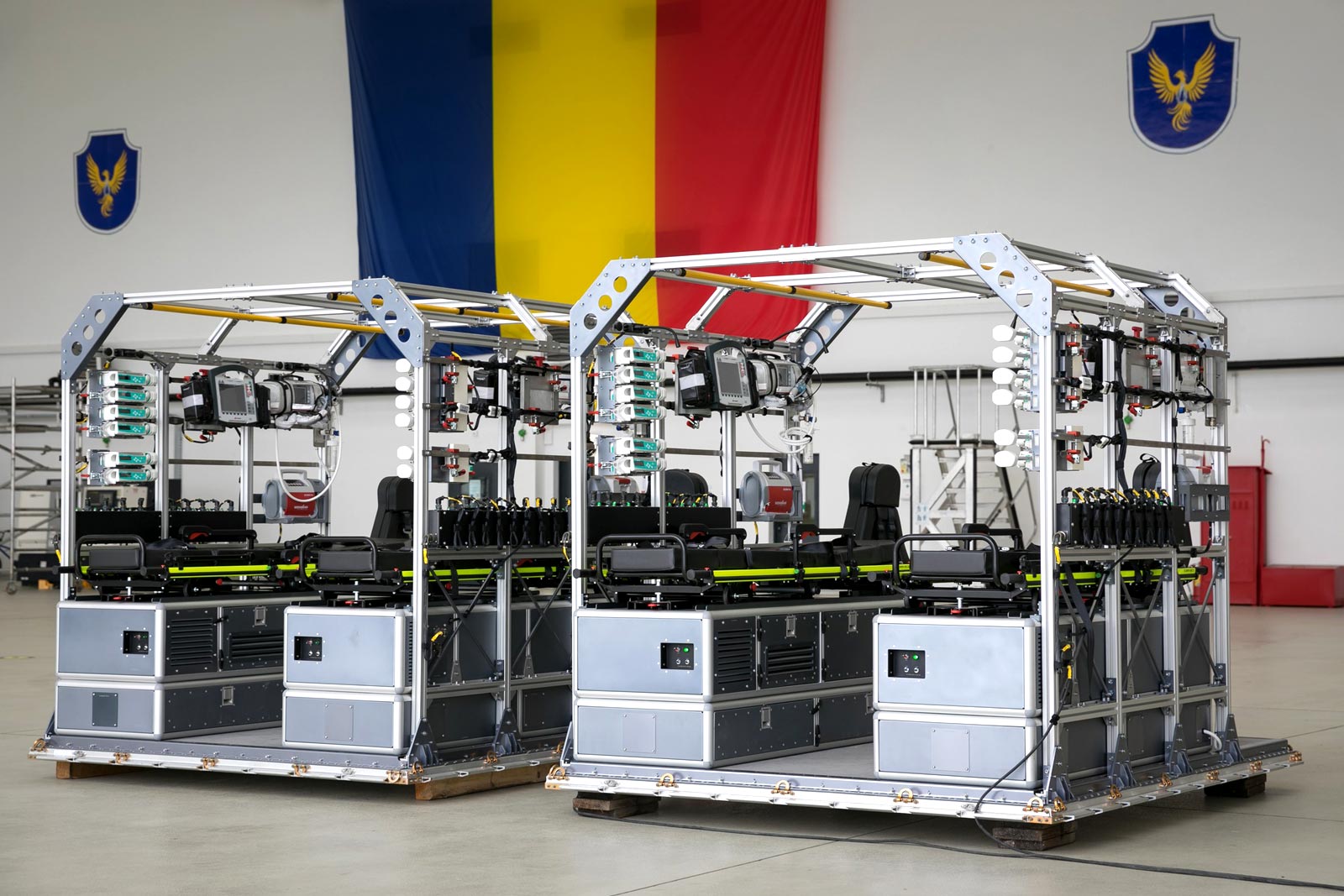
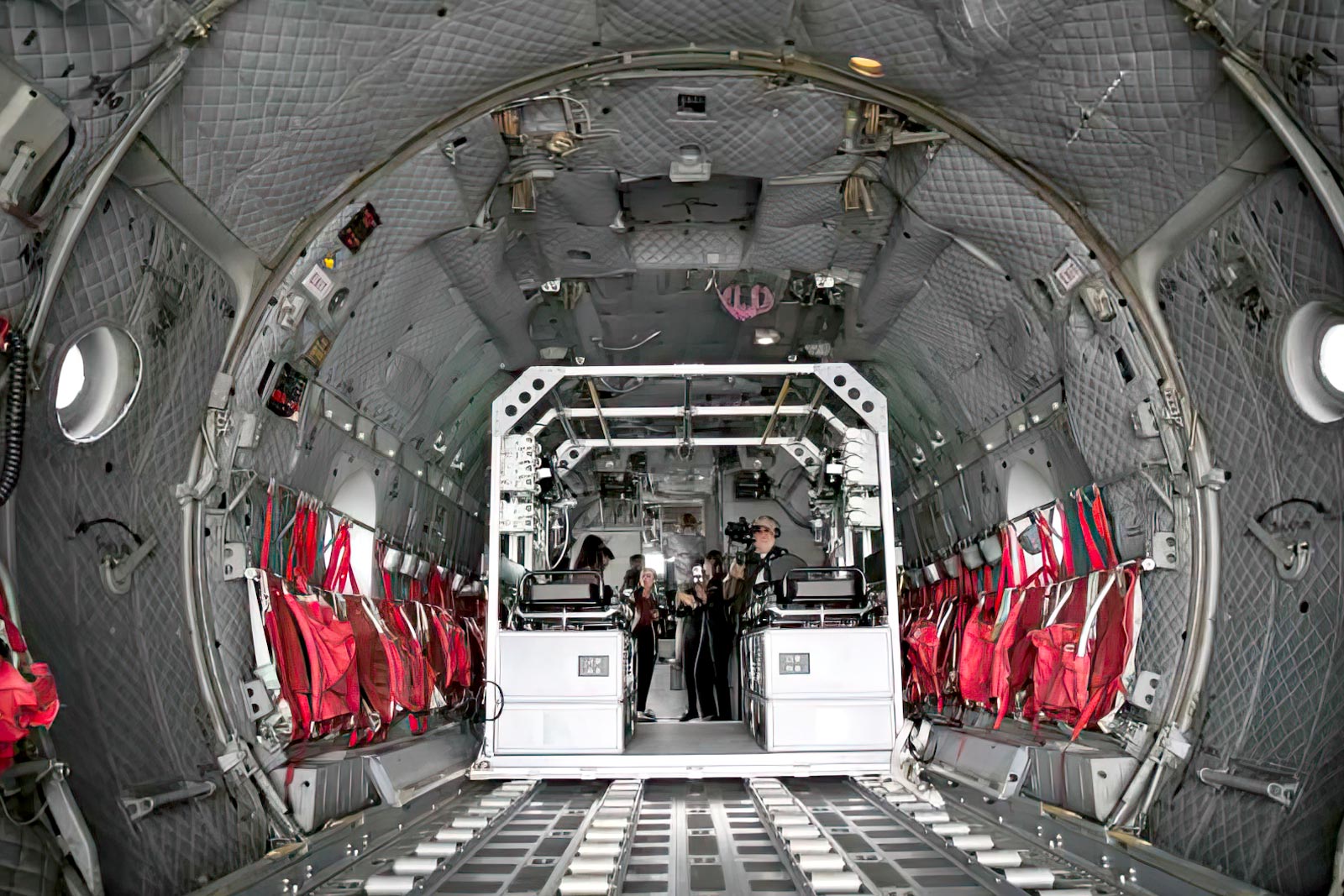
Tie-down systems in military transport aircraft are designed for cargo, which leaves few means of moving casualties or critical patients. The MEDEVAC DLT-7001 answers this with a medical module built on a standard 463L aviation pallet, providing transport and intensive-care support for two patients, plus seating for two medical attendants on sliding seats. The module fits any aircraft that accepts 463L pallets — the Leonardo C-27J, for example — subject to airworthiness conditions.
Each patient station carries a defibrillator-monitor with 12-lead ECG, SpO2, NIBP, IBP and temperature, a ventilator with volume and pressure support, four automatic syringes, two volumetric pumps and a suction unit. Oxygen is delivered by mask or to the ventilator from two 10-litre cylinders with their distribution system. The stretcher is compatible with the fixing systems of ambulances in current service and mounts in both orientations, rotated through 180°. The electrical system connects to ground and aircraft power across multiple voltages and frequencies; on full batteries and cylinders, the module guarantees a minimum of three hours of medical assistance.
Photo gallery
Specifications
| Platform | Standard 463L aviation pallet |
| Patient capacity | 2 patients, intensive-care level |
| Per-patient equipment | Defibrillator-monitor (12-lead ECG, SpO2, NIBP, IBP, temperature), ventilator with volume and pressure support, 4 automatic syringes, 2 volumetric pumps, suction unit |
| Oxygen | 2 × 10 L cylinders with distribution system; mask or ventilator supply |
| Stretcher | Compatible with in-service ambulance fixing systems; mounts in both orientations (180°) |
| Power | Ground and in-flight connection to aircraft electrical system, multiple voltages and frequencies |
| Autonomy | Minimum 3 hours of medical assistance on full batteries and oxygen |